Muzz (Muzmatch) vs. Salams: The Best App for Muslim Dating
Published Thu Apr 02 2026 by Thomas Jentzsch
 AI-generated
Welcome to our comprehensive comparison of two leading platforms designed for those seeking meaningful connections within their faith community. Choosing the right digital tool can significantly impact your journey toward finding a life partner.
Digital platforms have become increasingly accepted within the community as practical tools for meeting like-minded individuals. These services have transformed how people approach finding compatible partners who share similar values and goals.
Both platforms emerged in 2015 and have grown into significant players in the matchmaking space. Each serves millions of members worldwide, helping countless individuals find meaningful relationships.
This analysis will examine essential features, user experiences, safety protocols, and overall effectiveness. Our goal is to help you determine which service aligns best with your personal objectives and preferences.
While both cater to similar audiences, they offer distinct approaches that may appeal to different users. Your location, specific needs, and what you prioritize in a platform will influence which option works better for you.
We’ll also explore additional alternatives beyond these two major services, giving you a complete picture of available options in today’s landscape.
Key Takeaways
- Both platforms launched in 2015 and have established large user communities
- Each service offers unique features catering to different preferences
- Safety measures and verification processes vary between platforms
- User experience differs significantly based on interface design and functionality
- Geographic location can influence which platform has more active members in your area
- Success rates and marriage-focused features differ between services
- Exploring alternatives beyond these two options can provide additional choices
Understanding the Modern Landscape of Muslim Dating Apps
Modern technology has revolutionized the way people of faith connect with potential marriage partners. Just ten years ago, many individuals hesitated to admit using matrimonial websites. Today, these platforms have become normalized within everyday conversations.
Historical Transition from Traditional to Digital Matchmaking
The search for a life partner has evolved significantly from traditional family introductions. Busy career schedules and geographic limitations have made digital platforms increasingly practical. Contemporary living often results in fewer natural introductions through friends and family.
These intentional platforms serve as a way to meet diverse people who share your faith. They complement rather than replace the wisdom of cultural traditions that have helped build successful marriages for generations.
The Role of Cultural and Religious Guidance
Many in the community question how permissible these platforms are to use. Traditional guidance suggests that finding a spouse should begin with Qur’an and Sunnah principles rather than apps.
The recommendation emphasizes that women should not engage with these services without proper supervision from a guardian. Digital tools may serve as one component in the broader process of seeking a marriage partner.
While apps offer convenience and expanded options, they should maintain Islamic boundaries. This approach respects both modern technology and religious values within the Muslim community.
Deep Dive into “muzmatch vs salams”: Key Features and Offerings
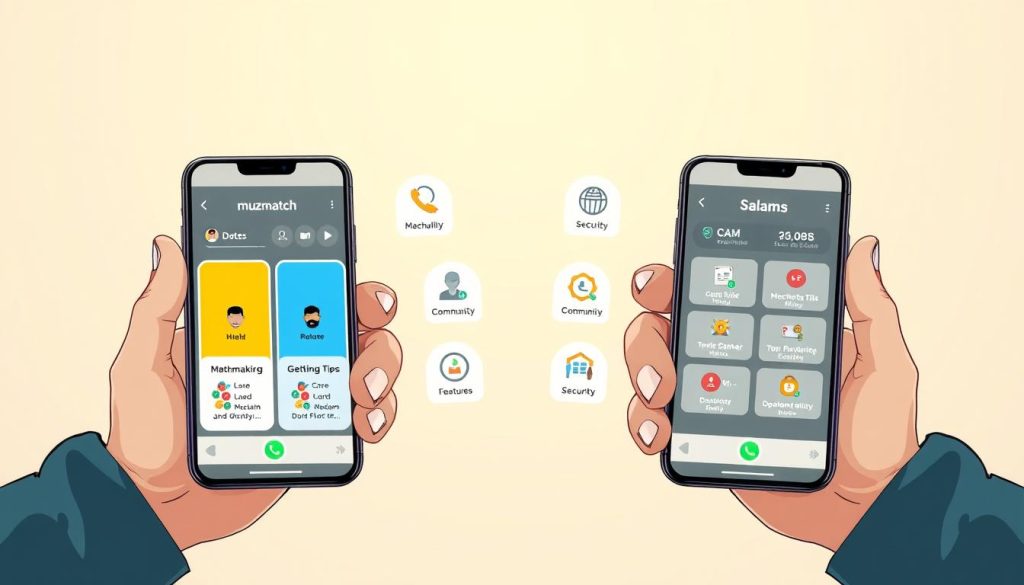
A closer look at the core features of these two popular services reveals distinct philosophies guiding their user experience. One platform employs a familiar swipe-based mechanism for quick profile browsing. Matches are made only when interest is mutual.
The other service prides itself on a stylish and intuitive interface. Its team emphasizes creating a respectful and enjoyable environment for singles. The goal is to make the search process both halal and engaging.
 AI-generated
User Interface and Functionality Comparison
One app’s design encourages rapid browsing, similar to mainstream social discovery apps. You can anonymously indicate interest with a simple swipe. This approach prioritizes speed and a large volume of potential connections.
In contrast, the other platform offers a more deliberate navigation experience. It is built to feel convenient and secure. Members often describe it as the more mature option, with users who appear more earnest in their search for a life partner.
Key differences include:
- Swiping mechanics versus a more curated browsing experience
- An added networking feature for friendship on one platform
- Educational content to help users prioritize values and characteristics
Privacy, Security, and Verification Approaches
Safety is a paramount concern for everyone. Both services require users to be at least 18 years old. They implement profile review processes to foster a genuine community.
Some competing platforms highlight photo verification to minimize scamming risks. While these major apps also have measures in place, user vigilance is always recommended. Maintaining Islamic boundaries during conversations is crucial.
Feedback suggests that issues like ghosting or inappropriate requests are less frequent on the platform known for its mature user base. This service also boasts an impressive record of facilitating marriages, demonstrating tangible success.
Comparative Analysis of User Experiences and Reviews
Beyond features and interfaces, what truly matters is how people actually navigate these services. Real stories from members provide honest insights into daily use.
Success Stories and User Satisfaction
One platform celebrates an impressive milestone: 100,000 marriages among 4 million members. This demonstrates real success in helping individuals find their perfect match.
Many users report fewer instances of ghosting and inappropriate requests compared to other options. The community tends to attract serious individuals focused on marriage goals.
People appreciate that both services cater specifically to their faith background. This eliminates awkward conversations about compatibility that occur elsewhere.
Addressing Common Criticisms and Challenges
Some women express frustration that certain men seem interested only in casual conversation. They want commitment but encounter people not ready for marriage.
The other service improved behavior issues after its rebrand, but challenges remain. Users still report encountering individuals with varying seriousness levels.
Many face the “paradox of choice” with endless profiles. Having too many options can make selecting a life partner feel overwhelming.
Success requires patience and maintaining personal boundaries. Users must navigate this process while staying true to their values.
Exploring Alternative Muslim Dating and Marriage Apps
Beyond the well-known options, several emerging platforms offer unique approaches to finding compatible partners. These services address specific challenges faced by users on mainstream applications.
 AI-generated
Highlighting Emerging Platforms like Muzproposal and Inshallah
Muzproposal tackles match inactivity with a 48-hour timer. Both parties must make a move to start chatting. This feature prevents endless browsing without real connection.
Inshallah serves European communities with approximately 4 million active users. It combines Desi and Arab members effectively. Privacy features like blurred photos help users feel secure.
Proposal encourages users to “Be your own Rishta Aunty.” Anyone can initiate contact within 48 hours. The free version limits profile views to promote thoughtful engagement.
AlKhattaba dominates Arab markets with over 5 million users. It has significantly more reviews than other platforms. This indicates strong community engagement and satisfaction.
The Impact of Regional Variations on User Choice
Your location significantly influences which platform works best. Different services dominate specific geographic markets. Choosing regionally popular apps increases your active user pool.
| Platform | Primary Region | Unique Feature | User Base |
|---|---|---|---|
| Muzproposal | Canada | 48-hour match expiration | Growing Canadian community |
| Inshallah | Europe/France | Blurred photo privacy | 4 million active users |
| Proposal | US/Canada/UK | Anyone can make first move | Balanced Arab/Desi mix |
| AlKhattaba | Arab world | Historical matchmaking theme | 5+ million users |
Trying multiple services expands your options dramatically. Each platform offers different features and community focuses. This diversity increases your chances of finding your perfect match.
These alternatives often implement strong safety measures. Age verification and responsive support teams create safer environments. Live events reportedly achieve impressive success rates for meaningful connections.
Key Considerations When Choosing Your Ideal Muslim Dating App
Making an informed choice about which service to use depends heavily on your current stage in the marriage search process. Contemporary life often limits natural introductions through traditional channels.
Casual meetings rarely guarantee shared values or marriage intentions. This makes digital platforms valuable tools for connecting with like-minded individuals.
Assessing Commitment, Communication, and Community Support
Start by honestly evaluating your readiness for marriage. Your seriousness should match the platform’s user base. Some services attract people genuinely seeking life partners.
Understanding proper interaction boundaries is crucial. How you begin this journey impacts your relationship’s foundation. Education about permissible conduct is essential.
Consider adopting a “breadth, not depth” strategy. Try multiple platforms rather than focusing on one. This expands your opportunities to find compatible matches.
Regional preferences matter greatly:
- Choose services strong in your geographic area
- Different platforms dominate various markets
- Local popularity increases active user pools
Evaluate communication features carefully. Some services encourage prompt interaction. Others allow unlimited time for connections to develop.
Seek guidance if you lack family support. Navigating these platforms while maintaining values requires knowledge. Community assistance can provide valuable accountability.
Safety features and verification processes protect users. They help prevent inappropriate behavior from either gender. Your security should always be a top priority.
Finding your ideal life companion deserves thoughtful consideration. Use these tools as part of a comprehensive search strategy. Patience and proper guidance lead to better outcomes.
Conclusion
The journey toward marriage in today’s digital age presents multiple pathway options. Both leading platforms offer valuable services for faith-based connections, each with distinct strengths.
Your geographic location significantly influences which service works best. One excels in European markets with marriage-focused users. The other dominates American regions with broader community reach.
Alternative applications provide additional choices worth exploring. Features like engagement timers or regional focus may better suit your needs.
Your personal priorities determine the ideal selection. Consider your seriousness, interface preferences, and alignment with each platform’s community.
Always approach these tools with proper Islamic boundaries. Maintain values and involve guardians when appropriate. Many have successfully found compatible partners through thoughtful platform use.
Your perfect match awaits with patience and the right approach. Start your search today, keeping realistic expectations while trusting the process.
FAQ
What are the main differences between Muzz and Salams?
The main differences lie in their approach and features. Muzz often focuses heavily on security and verification to create a safe space for finding a life partner. Salams, previously known as Minder, tends to have a more social, community-oriented feel with features that encourage interaction. Your choice might depend on whether you prioritize safety features or a larger, more active user base.
How do these platforms help users find a marriage partner?
Both apps are designed with the goal of marriage in mind. They offer profiles where users can specify their religious values, lifestyle preferences, and what they are looking for in an ideal partner. This helps in making meaningful connections with people who share similar goals for a serious relationship.
Are these apps safe and private for single Muslims?
Yes, safety is a top priority. Both platforms employ various measures like profile verification and privacy controls. They have teams dedicated to maintaining a respectful environment. It’s always a good practice to use the in-app features and take your time getting to know someone before sharing personal information.
Can I use these services if I’m looking for a partner from a specific cultural background?
A> Absolutely. These apps have a diverse global community of users. You can often use filters to narrow your search based on ethnicity, cultural background, and other important factors. This increases your chances of finding someone who aligns with your specific preferences.
What if I’m not ready for marriage but want to meet other single Muslims?
While the primary focus is on marriage, many people use these platforms to expand their social circle within the Muslim community. You can be clear in your profile about what you’re looking for. Just remember to communicate your intentions honestly to ensure you match with people who have similar expectations.
How do the free versions of these apps compare to the paid subscriptions?
The free versions offer a solid experience, allowing you to create a profile, browse, and match. Paid subscriptions typically unlock premium features like seeing who liked your profile, advanced filters, and more visibility. Trying the free version first is a great way to see if the app fits your needs before committing.