What is the Spiciest Thing in the World?
Published Sat May 31 2025 by Thomas Jentzsch
 AI-generated
For those who savor the burn of a hottest pepper, the quest for the next fiery sensation is always on. But what makes a pepper so hot? The answer lies in the Scoville scale, a method of measuring the heat level of a pepper.
The Scoville scale is the benchmark for determining the spiciness of peppers, and it’s what sets the hottest peppers apart from their milder counterparts. From the fiery enthusiasts to the curious, understanding the Scoville scale is key to exploring the realm of the spiciest thing in the world.
Key Takeaways
- The Scoville scale measures the heat level of peppers.
- The hottest peppers are determined by their Scoville rating.
- Spice lovers can explore various peppers to find their next favorite.
- The Scoville scale is the standard for measuring pepper spiciness.
- Understanding the Scoville scale enhances the appreciation of spicy foods.
Understanding the Science of Spiciness
Spiciness is not just about flavor; it’s a complex phenomenon rooted in chemistry and biology. The sensation of heat from chili peppers is primarily due to a chemical called capsaicin. To understand how spiciness works, we need to explore the Scoville scale and the role of capsaicin in creating this sensation.
The Scoville Heat Scale Explained
The Scoville scale is a method of measuring the heat level of a pepper by quantifying the amount of capsaicin present. According to the science of spiciness, “The scale measures the amount of heat in chili peppers through a test of diluting a chili pepper extraction with sugar water.” This process involves dissolving a pepper in water and then measuring how much sugar water is needed to neutralize the heat. The more sugar water required, the higher the pepper’s Scoville rating.
How Capsaicin Affects the Human Body
Capsaicin affects the human body by binding to pain receptors on the tongue, creating a burning sensation. This sensation is not just a simple response; it’s a complex interaction between the chemical and the body’s nervous system. Capsaicin triggers the release of certain neurotransmitters, which can lead to a variety of physiological responses, including sweating and an increased heart rate.
Moreover, capsaicin has been found to have several health benefits, including anti-inflammatory properties and potential pain relief. This makes understanding capsaicin and its effects crucial not just for those who enjoy spicy food, but also for its potential therapeutic applications.
In the world of superhot peppers, the Scoville scale is a critical tool for measuring their heat. From the Carolina Reaper to the Ghost Pepper, understanding the Scoville scale helps enthusiasts and chefs alike to navigate the complex world of spicy cuisine.
The World’s Hottest Natural Peppers
For those who dare to ignite their taste buds, the world of superhot peppers is a fascinating realm. The pursuit of the hottest pepper has become a culinary adventure, pushing the boundaries of heat and challenging the senses.
Carolina Reaper: The Current Record Holder
The Carolina Reaper is currently recognized as the world’s hottest pepper by the Guinness World Records. With an average Scoville heat unit (SHU) rating of 1,569,300, it far surpasses other peppers in terms of heat. To put this into perspective, the Carolina Reaper is about 300 times hotter than a jalapeño pepper.
 AI-generated
Trinidad Moruga Scorpion
The Trinidad Moruga Scorpion is another pepper that has made its mark on the Scoville scale, with an SHU rating ranging from 1,469,000 to 2,486,000. Its intense heat is a testament to the diversity and extremity of chili peppers.
Ghost Pepper (Bhut Jolokia)
Ghost Pepper, also known as Bhut Jolokia, was once considered the world’s hottest pepper. With an SHU rating of 855,000 to 1,041,427, it is still a formidable choice for those seeking intense heat.
7 Pot Douglah and Other Contenders
The 7 Pot Douglah is a variety of the 7 Pot pepper family, known for its dark, chocolatey color and intense heat, with an SHU rating of 1,853,936. Other contenders in the superhot pepper category include the Pepper X, which has been reported to have an average of 2.69 million SHU and peaks over 3 million SHU, as mentioned on pepperhead.com.
| Pepper Name | Scoville Heat Units (SHU) |
|---|---|
| Carolina Reaper | 1,569,300 |
| Trinidad Moruga Scorpion | 1,469,000 – 2,486,000 |
| Ghost Pepper (Bhut Jolokia) | 855,000 – 1,041,427 |
| 7 Pot Douglah | 1,853,936 |
| Pepper X | 2,690,000 (average), peaks over 3,000,000 |
These superhot peppers not only challenge the taste buds but also represent the pinnacle of pepper cultivation and breeding. For enthusiasts and thrill-seekers, exploring the world’s hottest natural peppers is an adventure that combines culinary exploration with a touch of daredevil spirit.
The Spiciest Thing in the World: Pure Capsaicin and Synthetic Compounds
Beyond the realm of peppers, lies a category of substances that embody the essence of spiciness. These are not ingredients you can find in your average kitchen, but rather compounds that have been isolated, synthesized, or formulated for their intense heat.
Pure Capsaicin: Nature’s Nuclear Heat
Pure capsaicin is the most potent form of capsaicin, with a Scoville rating of over 16 million SHU. To put that into perspective, the Carolina Reaper, one of the hottest peppers, clocks in at around 1.5 million SHU. Capsaicin is the active component in chili peppers that gives them their heat. In its pure form, it is an extremely potent substance that requires careful handling.
The use of pure capsaicin is mostly restricted to research and industrial applications. It’s used in the production of pepper spray and other self-defense products. However, handling pure capsaicin requires protective gear, as it can cause severe irritation to the skin and eyes.
Resiniferatoxin: The Ultimate Chemical Spice
Resiniferatoxin (RTX) is a naturally occurring compound found in the sap of the Euphorbia resinifera plant. It is considered to be one of the hottest substances known, with a potency that far exceeds that of capsaicin. RTX is not typically used in food or culinary applications but is rather a subject of scientific research.
RTX binds to the same pain receptors as capsaicin, but with a much higher affinity. This makes it an interesting compound for studying pain and pain management. However, its extreme potency also makes it a hazardous substance to handle.
Pepper Spray and Military-Grade Compounds
Pepper spray is a common self-defense tool that utilizes the irritant properties of oleoresin capsicum, a blend that includes capsaicin. While not as potent as pure capsaicin, pepper spray is designed to incapacitate an attacker without causing permanent harm. Military-grade pepper sprays and other compounds are formulated for their potency and effectiveness in various environments.
| Compound | Scoville Heat Units (SHU) | Primary Use |
|---|---|---|
| Pure Capsaicin | >16,000,000 | Research, Industrial Applications |
| Resiniferatoxin | Not rated on Scoville scale, but far exceeds capsaicin in potency | Scientific Research |
| Pepper Spray | Varies, but typically much less than pure capsaicin | Self-defense |
The substances discussed in this section represent the pinnacle of spiciness, pushing the boundaries of what is considered tolerable for human exposure. While they have various applications, from research to self-defense, their potency demands respect and caution.
Extreme Hot Sauces That Challenge Human Limits
In the realm of spicy foods, extreme hot sauces are the ultimate test of endurance, with some sauces pushing the limits of human tolerance. These aren’t your average hot sauces; they’re crafted to deliver an intense, fiery experience that challenges even the most seasoned enthusiasts. From sauces that mimic the heat of the world’s hottest peppers to those that incorporate synthetic compounds, the variety is vast and the challenge is real.
The Mad Dog357 Plutonium No.9
The Mad Dog357 Plutonium No.9 is one of the most notorious hot sauces available, boasting a Scoville rating of 9 million SHU. This sauce is not for the faint of heart, as it combines a potent blend of spices and a unique fermentation process to achieve its extreme heat.
Blair’s 16 Million Reserve
Blair’s 16 Million Reserve is another extreme hot sauce that has gained a following among thrill-seekers. With a Scoville rating of 16 million SHU, it’s among the hottest commercially available sauces. Its intense heat is attributed to its use of some of the world’s hottest peppers.
The Source Hot Sauce
The Source Hot Sauce is known for its intense, lingering heat, with a Scoville rating of 7.1 million SHU. Made from a blend of the hottest peppers and spices, it’s a favorite among those who enjoy pushing their limits with every meal.
These extreme hot sauces represent the pinnacle of spicy food challenges, offering a culinary adventure for those brave enough to take on their intense heat.
The World’s Spiciest Dishes and Food Challenges
From the depths of Indian cuisine to the fiery streets of China, the world’s spiciest dishes are a testament to the cultural significance of heat in food. These culinary creations are not just about the thrill of consuming something hot; they are deeply rooted in tradition and cultural identity.
Phaal Curry: The Volcanic Indian Dish
Phaal Curry, often referred to as the “nuclear” curry, is a dish that originates from Indian cuisine and has gained notoriety worldwide for its intense heat. Made with a variety of hot peppers, including the ghost pepper, and a blend of spices, Phaal Curry is not for the faint of heart. Its Scoville rating can vary, but it’s known to be significantly hotter than a standard curry.
Key characteristics of Phaal Curry:
- High Scoville rating due to the use of extremely hot peppers
- A blend of spices that adds depth to its heat
- Cultural significance in Indian cuisine as a challenge for those who dare
Sichuan Hot Pot: Chinese Fire Bowl
Sichuan Hot Pot is a traditional Chinese dish known for its numbing and spicy flavor, courtesy of Sichuan peppercorns and chili peppers. The hot pot is a communal dining experience where diners cook their choice of ingredients in a simmering pot of spicy broth. The spice level can be adjusted, but for the adventurous, it’s a chance to experience the true heat of Sichuan cuisine.
The experience of Sichuan Hot Pot is as much about the social gathering as it is about the food. It’s a testament to the communal aspect of dining in Chinese culture, where the act of eating is a shared experience.
Infamous Spicy Food Challenges Across America
America has taken the concept of spicy food challenges to a new level, with various restaurants and eateries offering dishes that test one’s tolerance for spice. From ghost pepper wings to curry-based challenges, these events are as much about the thrill of the challenge as they are about the food itself.
Some notable challenges include:
- The “Ghost Pepper Challenge” at local eateries
- Curry-based challenges that push the limits of Scoville ratings
- Spicy food eating contests that attract thrill-seekers from across the country
These challenges not only showcase the diversity of spicy cuisine available in America but also highlight the culture of food challenges that has become a significant part of the dining experience.
Safely Handling and Consuming Ultra-Spicy Foods
The thrill of consuming the spiciest thing in the world comes with a caveat: knowing how to handle the heat safely. As enthusiasts explore the realm of ultra-spicy foods, understanding the necessary precautions becomes crucial. This knowledge not only enhances the culinary experience but also prevents potential discomfort or harm.
 AI-generated
Protective Measures When Handling Super-Hot Peppers
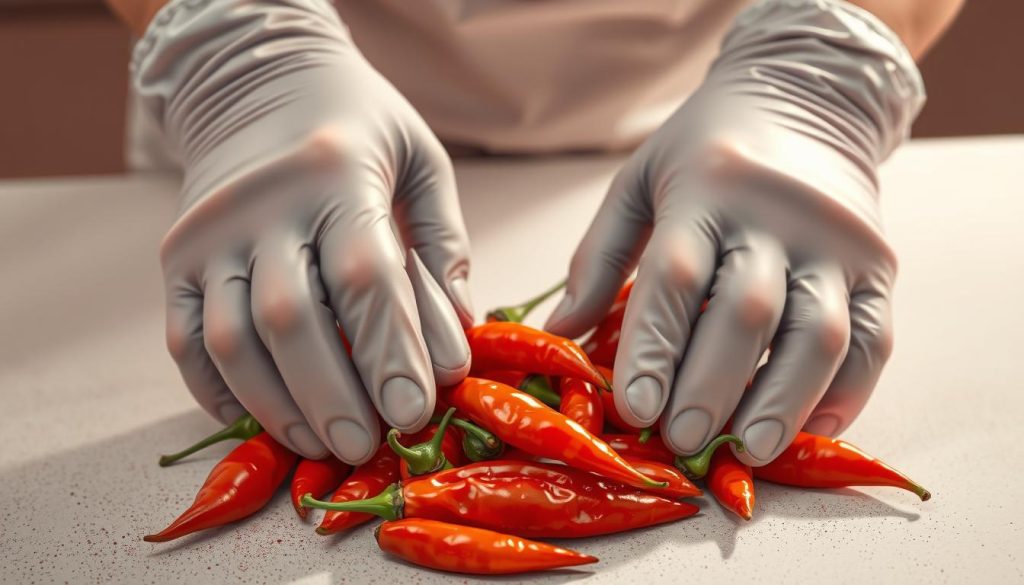
When handling super-hot peppers, several protective measures can be taken to minimize potential irritation or discomfort.
- Wear gloves to prevent the oils from the peppers coming into contact with your skin.
- Avoid touching your face, especially your eyes, after handling hot peppers.
- Use utensils to handle peppers instead of bare hands.
Remedies for When Spice Overwhelms
Despite precautions, sometimes the heat can become overwhelming. Here are some remedies to alleviate the discomfort:
- Dairy Products: Milk or yogurt can help neutralize the heat by binding to the capsaicin.
- Bread: Bread can absorb some of the capsaicin oil, providing temporary relief.
- Honey or Sugar: A spoonful of honey or sugar can help counteract the burning sensation.
Conclusion
The quest to identify the spiciest thing in the world leads to a fascinating exploration of the hottest peppers, pure capsaicin, and synthetic compounds that challenge human tolerance. From the Carolina Reaper to resiniferatoxin, these extreme substances push the boundaries of what is considered bearable.
When dealing with such potent ingredients, it’s essential to exercise caution and be aware of the potential consequences. Whether you’re a seasoned spice enthusiast or just curious about the world’s hottest foods, understanding the science behind spiciness and taking necessary precautions can help you navigate this extreme culinary landscape.
As we’ve seen, the title of the spiciest thing in the world is contested by various contenders, from natural peppers like the Ghost Pepper to synthetic compounds used in military-grade pepper sprays. The world of extreme heat is diverse and complex, offering a range of experiences for those brave enough to explore it.
FAQ
What is the Scoville scale, and how does it measure the heat of a pepper?
The Scoville scale is a method of measuring the heat of a pepper by quantifying the amount of capsaicin present. Capsaicin is the compound responsible for the sensation of heat in chili peppers. The Scoville scale assigns a rating based on the pepper’s capsaicin content, with higher ratings indicating greater heat.
What is capsaicin, and how does it affect the human body?
Capsaicin is a naturally occurring compound found in chili peppers, responsible for their heat. When ingested, capsaicin binds to pain receptors in the mouth and throat, causing a burning sensation. It can also stimulate the release of endorphins, which can create a feeling of euphoria.
What are some of the world’s hottest natural peppers, and how hot are they?
Some of the world’s hottest natural peppers include the Carolina Reaper, Trinidad Moruga Scorpion, Ghost Pepper, and 7 Pot Douglah. These peppers have Scoville ratings ranging from over 855,000 to over 2,000,000 units, making them significantly hotter than more common peppers like jalapenos.
What is pure capsaicin, and how is it used?
Pure capsaicin is a highly concentrated extract of the capsaicin compound found in chili peppers. It is used in various applications, including pain relief creams and pepper sprays. However, handling pure capsaicin requires caution due to its extreme potency.
How can I safely handle and consume ultra-spicy foods?
To safely handle and consume ultra-spicy foods, it’s essential to take protective measures, such as wearing gloves when handling super-hot peppers and having dairy products on hand to help neutralize the heat. If you experience discomfort or pain after consuming spicy food, remedies like milk or yogurt can help alleviate the burning sensation.
What are some of the hottest hot sauces available, and what are their Scoville ratings?
Some of the hottest hot sauces available include The Mad Dog 357 Plutonium No.9, Blair’s 16 Million Reserve, and The Source Hot Sauce. These hot sauces have Scoville ratings ranging from hundreds of thousands to millions of units, making them extremely potent.
What are some of the world’s spiciest dishes and food challenges, and how hot are they?
Some of the world’s spiciest dishes and food challenges include Phaal Curry, Sichuan Hot Pot, and infamous spicy food challenges across America. These dishes often feature Scoville ratings in the hundreds of thousands or even millions, pushing the limits of human tolerance for heat.
What is resiniferatoxin, and how does it compare to capsaicin?
Resiniferatoxin is a synthetic compound that is significantly more potent than capsaicin, with a Scoville rating estimated to be thousands of times higher. It is not typically used in food or culinary applications due to its extreme potency and potential risks.